

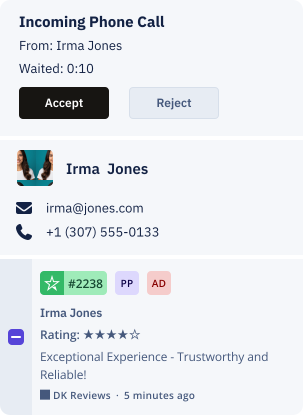
Call center software where the phone is native, not bolted on
Voice, chat, email, and social running through one system, with the same customer context on every channel. Recognised by Gartner as a Digital-First Specialist for advanced native voice.
What call center software actually needs to do
At its core, call center software routes calls, gives agents context, and reports on the queue.
Traditional tools optimise for the call itself. Modern buyers need the call connected to everything else.

Native channels, not add-ons

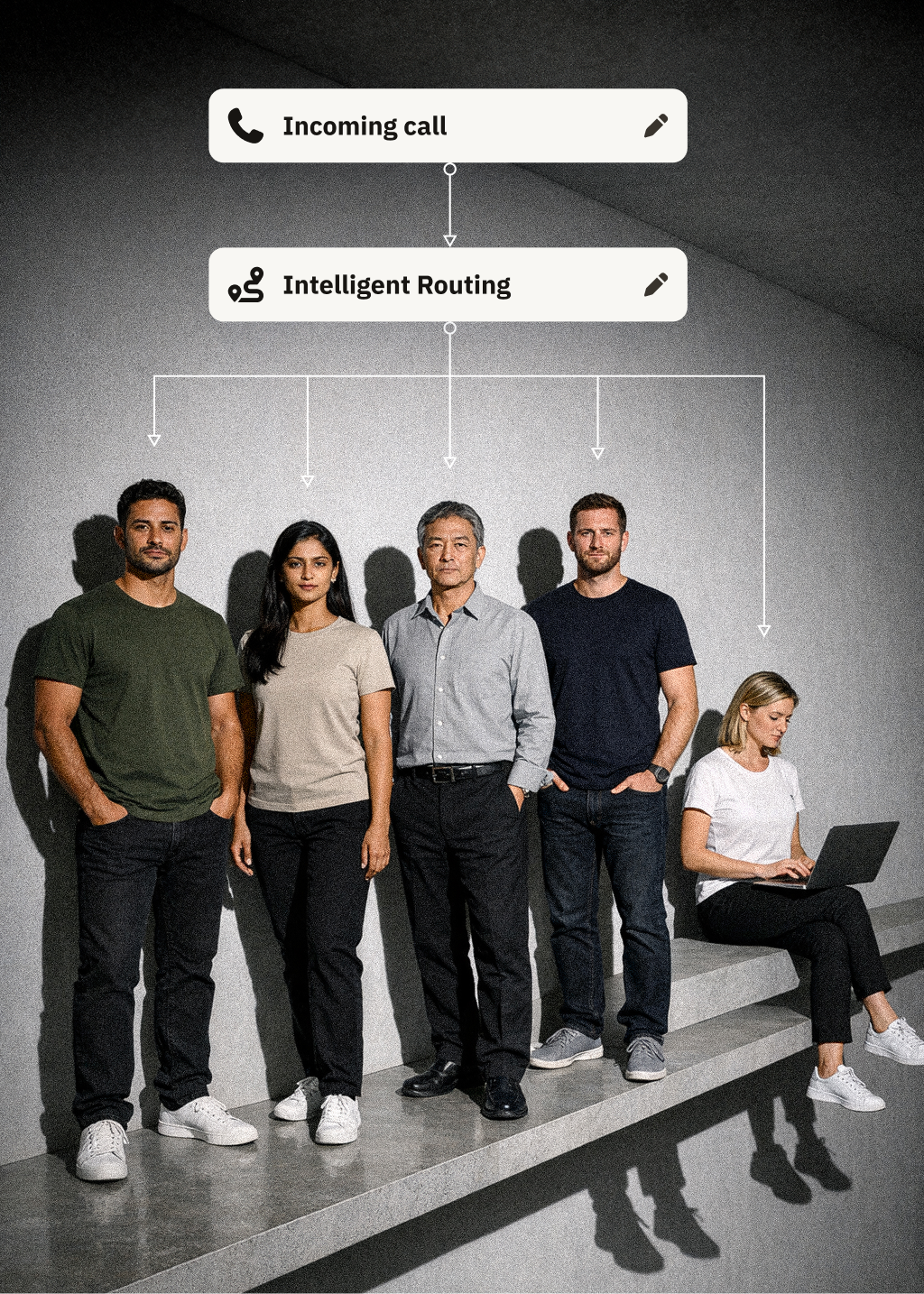
Intelligent routing

Real-time reporting

Quality Assurance

AI that resolves, not just routes
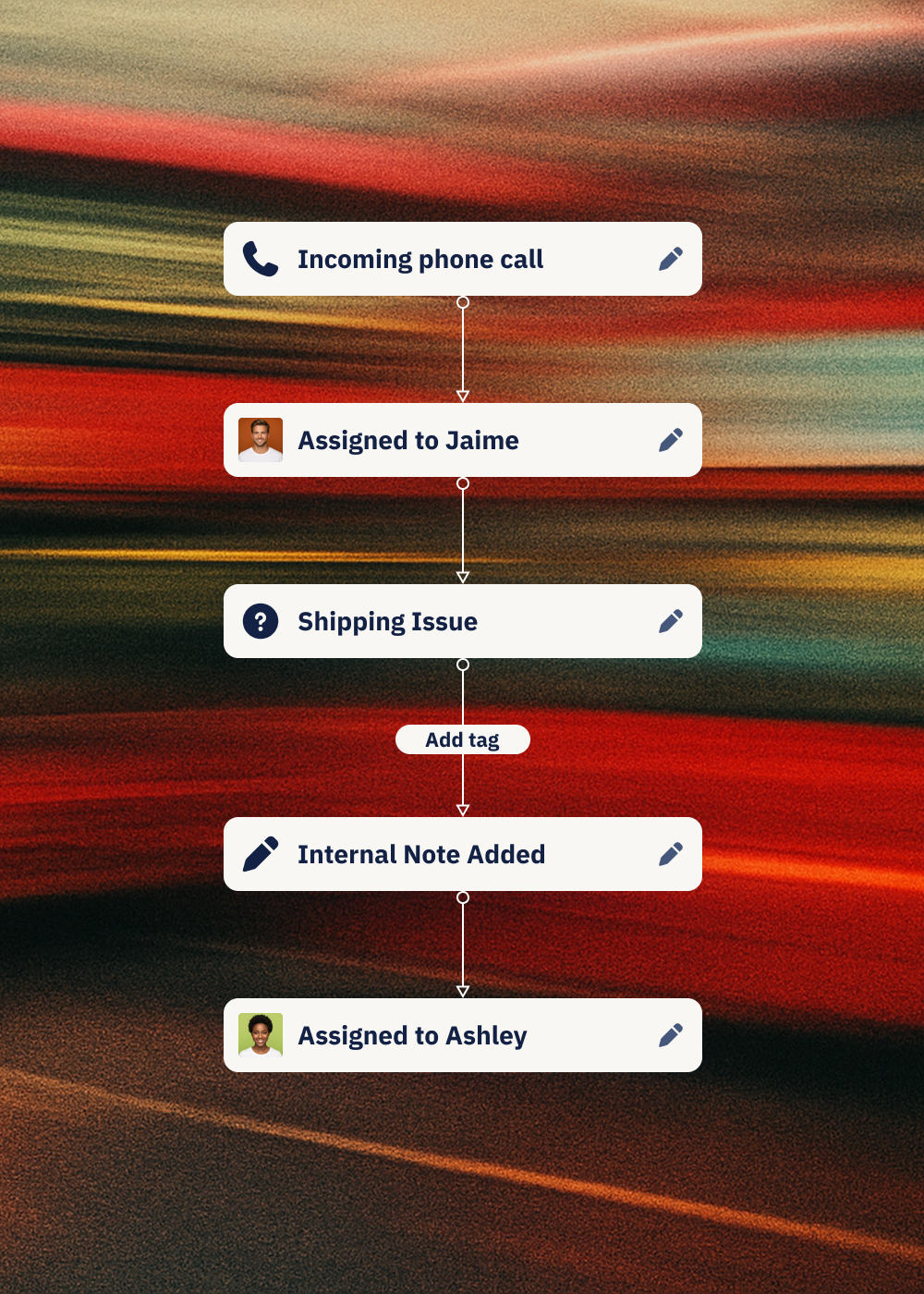
Modern vs. traditional call center software
Traditional call center software was built for large, dedicated phone teams, often outsourced, handling high call volume with minimal context per call. That model still exists and works for some use cases. But a growing share of buyers, particularly mid-market ecommerce and consumer brands, need something different: a smaller team handling phone alongside chat, email, and social, where the same agent might move between channels within a single shift, and the same customer might contact through two different channels for the same issue.
Take a customer who calls about a delayed order, then emails a follow-up two days later when it still hasn't arrived. In a traditional setup, that's two disconnected records: a call log the phone team can see, and a support ticket the email team handles separately, with no link between them. The agent on the second contact starts from zero, asking the customer to explain what already happened on the call. In a unified system, that email lands in the same conversation thread as the call, with the same customer record, so the agent already has the context before they reply.
Dixa is built for that mid-market, multi-channel reality, not for running a 500-seat outsourced enterprise contact centre. If you're evaluating enterprise contact centre suites like Five9, Genesys, or NICE CXone, they're built for a different scale and a different problem than what Dixa solves.
Why native voice matters
Zendesk gates voice behind a separate Contact Center add-on, roughly $50 per agent per month on top of the base plan. Gorgias charges per minute. Intercom doesn't offer native voice at all. Dixa includes voice natively in every plan, no add-on, no per-minute billing, so phone shares the same routing, reporting, and customer context as every other channel.
Customers building on this see it directly: Dott and tink both run phone through Dixa's unified workspace, with the same intelligent routing that handles their other channels.
Comparing call center software

What this looks like in practice
Native voice means an agent picking up a call sees the same order history and past conversations they'd see on email or chat, no separate lookup.
The same omnichannel reporting covers voice alongside every other channel, so a peak-season call spike shows up in the same dashboard as chat and email volume, not a separate report only the phone team sees.
That's what native voice actually buys you: one platform, one record, one team, whether the customer picked up the phone or opened a chat window.
The more you integrate and the more you get better at prompting, the more Mim evolves from just an AI agent to really a helping colleague."

Most providers just focused on content-related AI. Mim gave us the ability to do tasks which normally colleagues do. That's what really made the difference."

Dixa’s automation and incredible AI agent assistant have greatly enhanced our efficiency and productivity."

Since partnering with Dixa, we've nearly doubled the workload achieved each day–resulting in extremely positive customer satisfaction and very happy teams."

To enhance our CX, we knew that the business needed a unified platform to reduce silos across channels and teams. Dixa's one-screen wonder has been a game changer that keeps our workflows seamless."











Frequently Asked Questions
See what Dixa can do for you
Book a call with our team and discover how brands like yours handle more with less.
