Trusted by 850+ brands across 42 countries

Miinto
mejuri
rapha
dott
Mytheresa
monica-vinader
gls
allsaints
monese
outnorth
mindful-chef
charles-tyrwhitt
clubl
freddie's flowers
PastaEvangelists
loaf
oliver bonas
mammut
qpark
fabfitfun
adanola
organicbasics
mammaly
75%

automation within weeks

-40%

reduction in manual routing

100%

conversations routed

0

engineering tickets

Everything included

Intelligent Routing

AI
Match conversations to the right agent by skill, language, or priority

Flow Builder

AI
Design conversation journeys without code

Automation Builder

AI
Trigger actions based on tags, time, or customer data

Queue Management

See and prioritize what's waiting across channels

Side Conversations

Loop in teammates without losing context

Conversation Offers

Let agents pick up conversations based on availability

Scheduled Conversations

Set follow-ups to resurface at the right time

Custom Attributes

Bring in order data, loyalty tiers, or any field you need

Build workflows visually, 
no code required

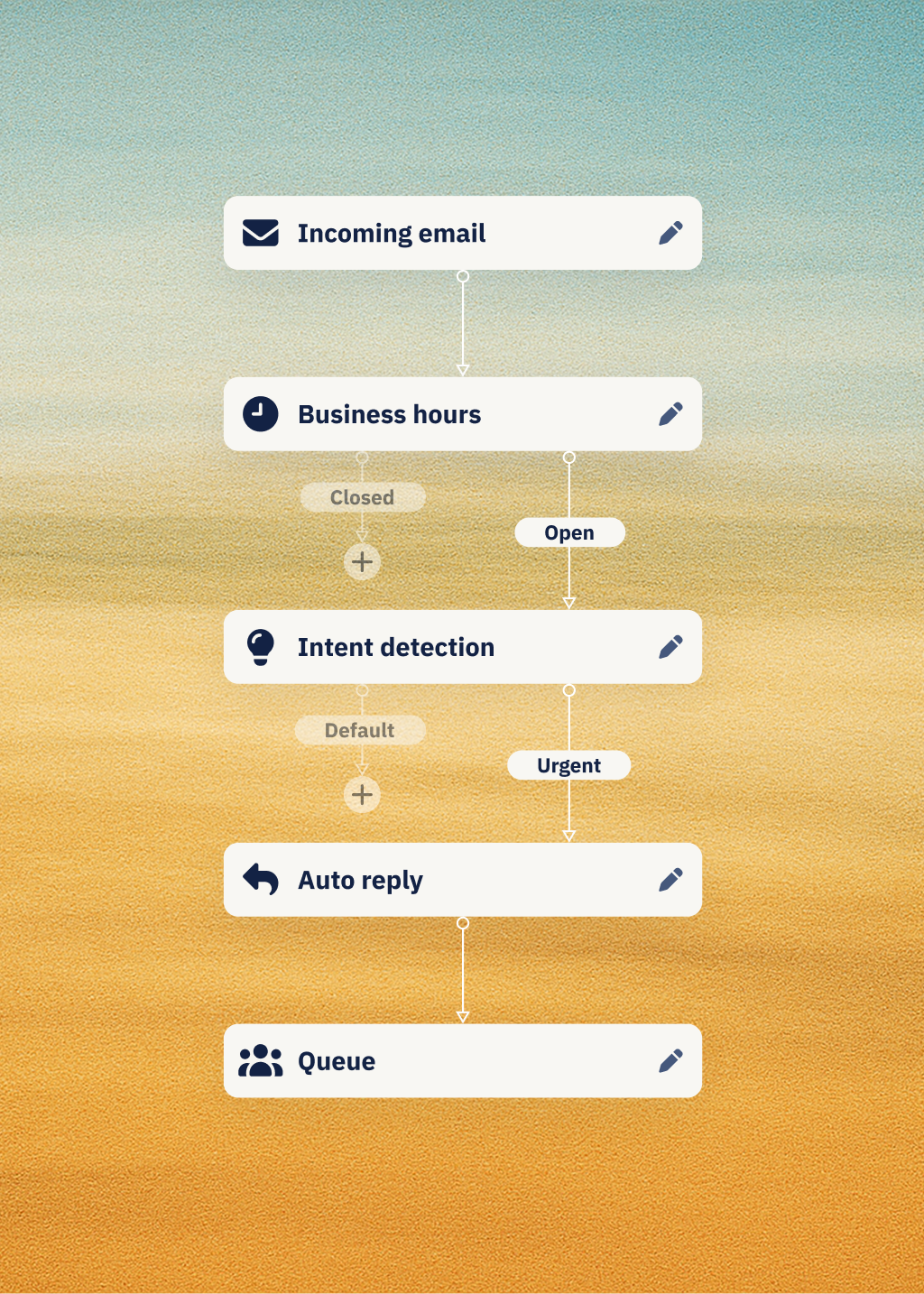
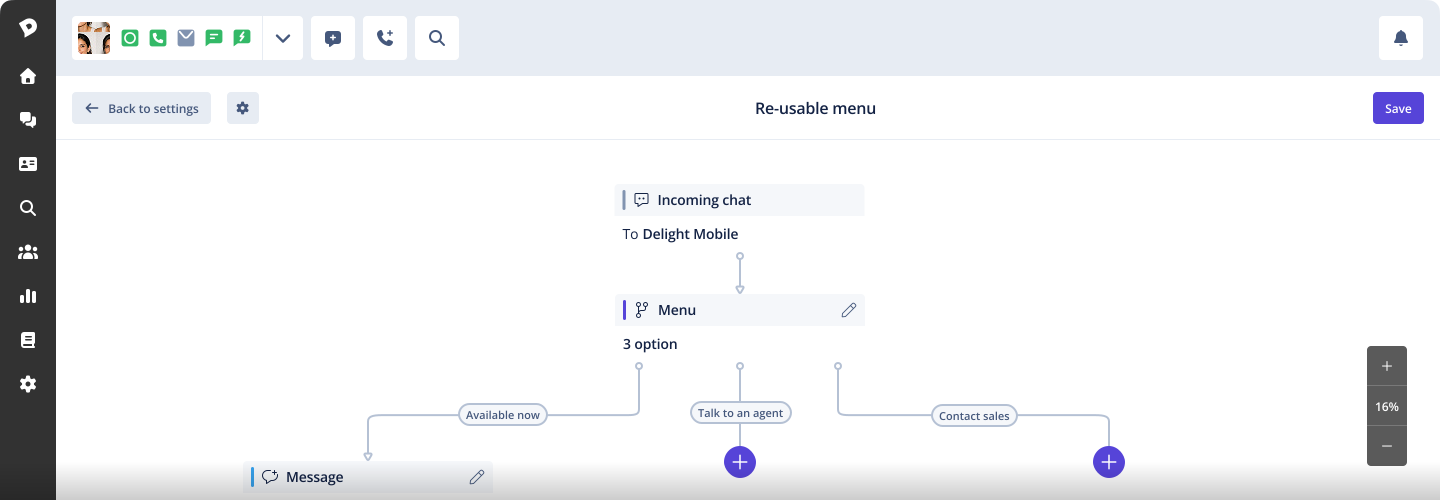
Drag, drop, and connect. Dixa's Flow Builder lets you design conversation journeys, automate repetitive tasks, and trigger actions based on what's happening–all without engineering tickets or IT involvement.

  • Create routing logic, auto-replies, and escalation paths visually
  • Trigger automations based on time, tags, SLA status, or custom events
  • Test and iterate without waiting on developers
Every conversation reaches the right person, every time

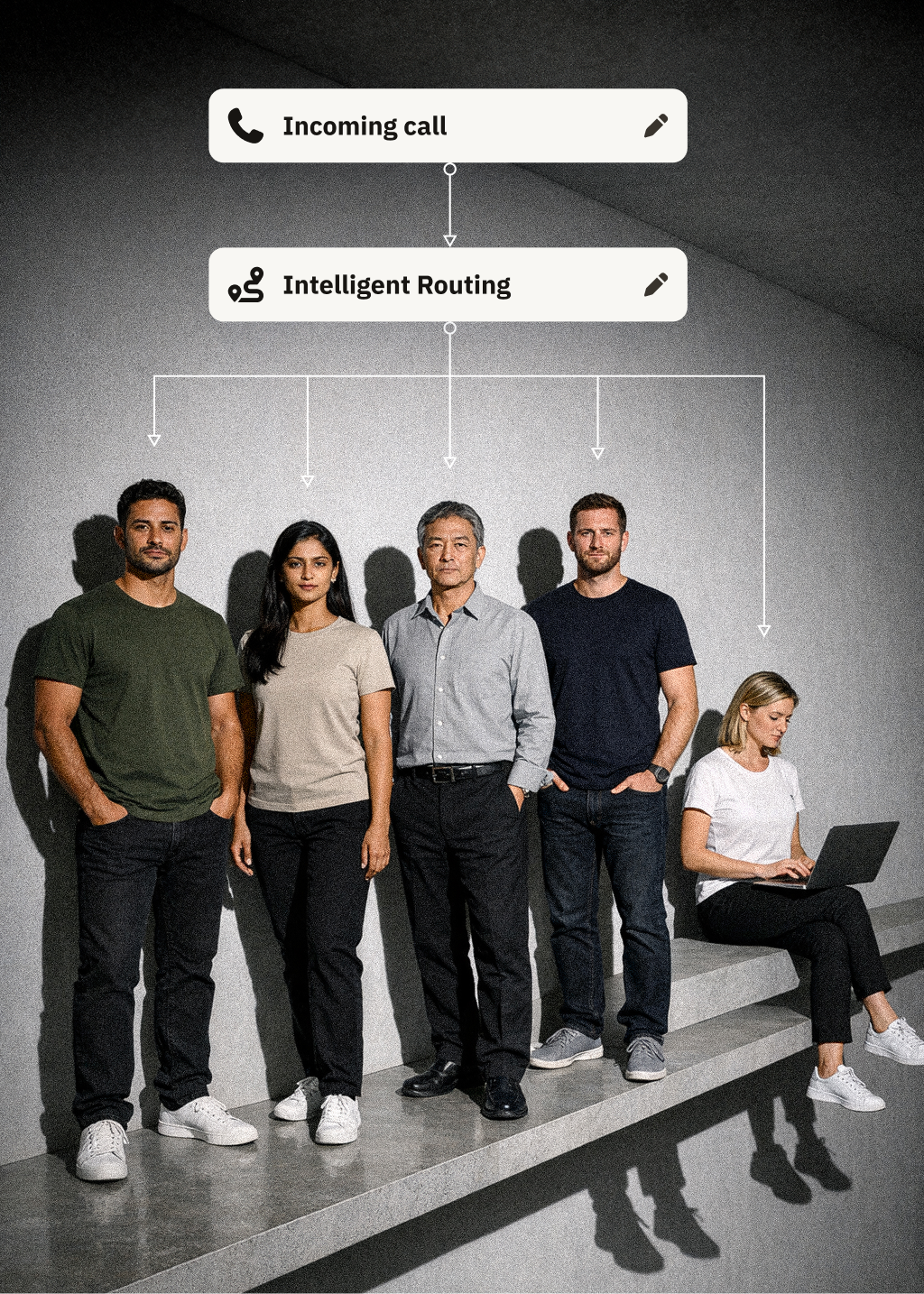
Stop manually triaging. Dixa routes conversations automatically based on skills, language, VIP status, or any custom rule you set. Customers get to the right agent faster, and your team stops playing traffic controller.

  • Route by agent skill, language, availability, or customer attributes
  • Prioritize VIPs, high-value customers, or urgent issues automatically
  • Balance workloads so no agent gets overwhelmed while others sit idle
AI that works behind the scenes so your team doesn't have to

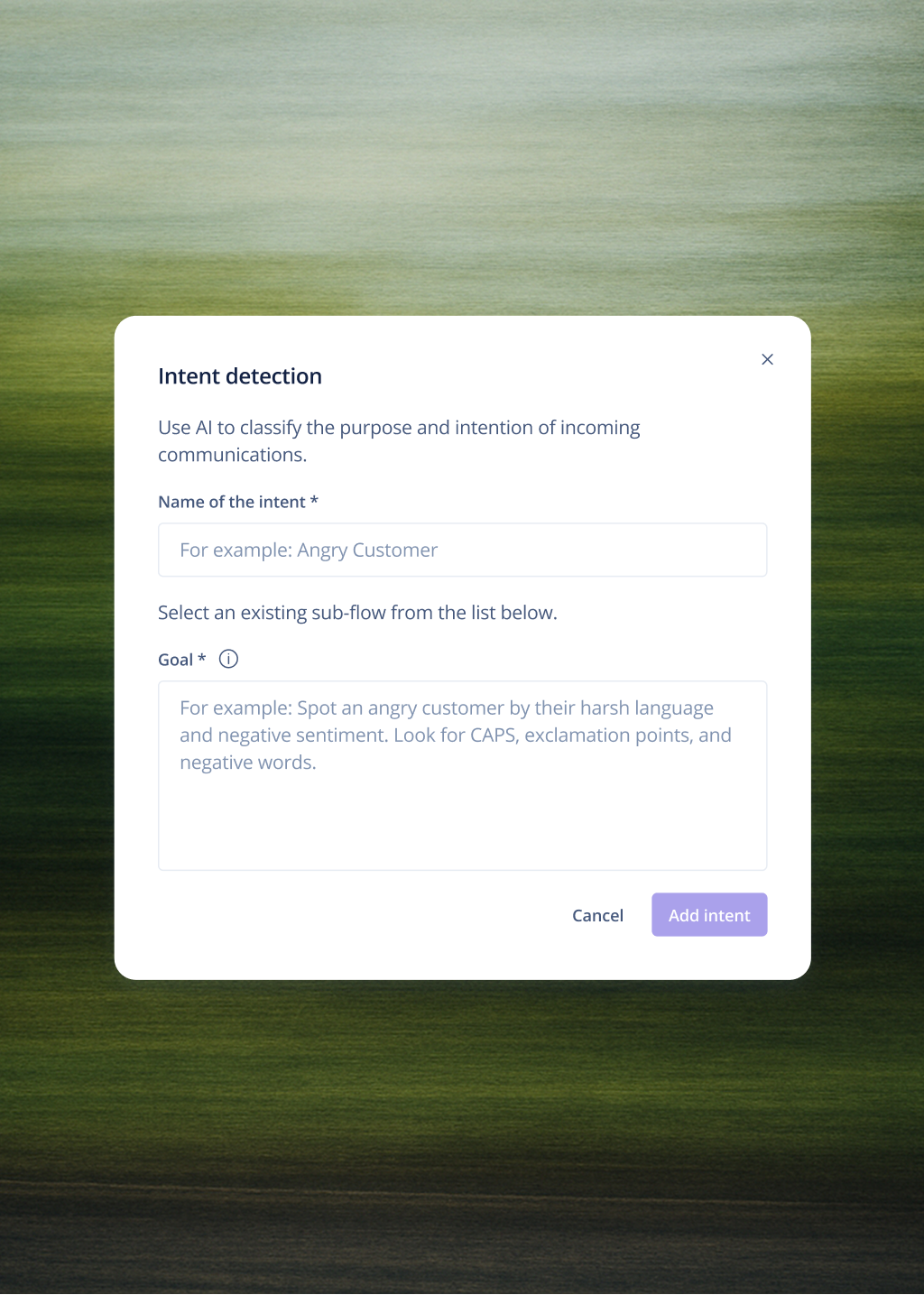
Intent Detection identifies what customers need before an agent sees the conversation. The new Automation AI Agent goes further –analyzing, categorizing, extracting information, and taking action without involving a human.

  • Detect customer intent and route to the right queue or trigger the right response
  • Filter out spam and auto-replies automatically
  • Use AI to tag, categorize, and enrich conversations as they arrive
Dixa’s automation and incredible AI agent assistant have greatly enhanced our efficiency and productivity."
Erica Piccolomini
Chief Customer Officer at Stayforlong
Read the case study
Since partnering with Dixa, we've nearly doubled the workload achieved each day–resulting in extremely positive customer satisfaction and very happy teams."

Natasha Sims
Operations Director at Oliver Bonas
Read the case study
To enhance our CX, we knew that the business needed a unified platform to reduce silos across channels and teams. Dixa's one-screen wonder has been a game changer that keeps our workflows seamless."

Rhys Howells
Head of Customer Service at Rapha
Read the case study
-33%
contact per booking
-50%
email backlog
90%
CSAT
2x
productivity/hour
+14%
improvement in CSAT scores
+17%
increase in customer retention

Frequently Asked Questions

What is intelligent routing in customer service?

ntelligent routing automatically assigns incoming conversations to the best-available agent based on skills, language, customer priority, and issue type — instead of dropping everything into a shared inbox for agents to pick from. The practical difference: no cherry-picking, no manual triage, no VIP customers waiting behind simple queries. Teams switching from ticketing systems to Dixa's routing model report an average 20% efficiency gain before any AI automation is deployed.

Why is a shared inbox a problem at scale?

In a shared inbox, agents self-select what they work on. Fast, simple queries get picked up first. Complex issues, difficult customers, and less-experienced agents are avoided. VIP customers queue behind routine ones. The team lead spends 30-60 minutes every morning manually sorting and assigning — time that compounds across every working day. Intelligent routing eliminates all of this automatically, in real time, the moment a conversation arrives.

How does Dixa decide which agent gets which conversation?

Routing decisions are based on rules you configure: agent skills, language proficiency, customer tier, issue type, channel, time of day, or any combination. VIP customers can be prioritised to skip queues. Technical queries route to specialists. After-hours contacts route to on-call teams or trigger automated responses. Everything is configured by CX managers in the Flow Builder — no IT involvement, no engineering tickets.

Can I automate customer service workflows without a developer?

Yes. Dixa's Flow Builder is fully visual — drag, drop, connect. Routing rules, auto-replies, escalation paths, SLA triggers, and follow-up scheduling are all built without code. CX managers and team leads handle configuration themselves. This is a significant operational difference from platforms like Salesforce Service Cloud, which typically require agencies or developer resources for workflow changes.

What kinds of tasks can workflow automation handle?

Routing conversations to the right agent or team, sending acknowledgement messages, auto-tagging by topic or channel, triggering SLA escalations, scheduling follow-ups, sending post-conversation CSAT surveys, auto-responding to common queries outside business hours, and flagging high-priority contacts for immediate attention. These are the tasks that consume disproportionate manager and team lead time in manual operations and none of them require a human once the workflow is built.

How does routing work differently from what Zendesk or Freshdesk does?

Zendesk and Freshdesk use queue-based models — conversations sit in a shared inbox and agents pull from it. This creates the cherry-picking and triage problems described above. Dixa uses an offered model — conversations are actively pushed to the best-matched agent the moment they arrive. Johnstons of Elgin described it as "the single biggest operational shift from Freshdesk." Ellis Brigham cited "intelligent conversation prioritisation over manual shared-inbox triage" as the reason they switched.

Does automation affect the quality of customer interactions?

Done well, it improves it. Routing means customers reach the right person faster and first time. Automation removes the manual admin that makes agents less available for the conversations that need them. The human interactions that do happen are higher quality because agents aren't fatigued by repetitive work and have full context when they pick up. Stayforlong reduced contacts per booking by 33% after implementing Dixa's automation — fewer contacts, better outcomes.

How does this work alongside Mim AI Agent?

Routing and automation handle the orchestration layer — who gets what, when, and in what order. Mim operates at the resolution layer — handling inquiries autonomously without a human. They work together: Mim resolves what it can, and routing ensures that what reaches a human agent reaches the right one immediately. Greenbow achieved 75% automation within weeks by combining both.

See what Dixa can do for you

Book a call with our team and discover how brands like yours handle more with less.

DixaDixa