

TL;DR: Dixa is the strongest fit for premium European ecommerce brands that need native voice on every plan, AI priced per conversation at €0.40, and EU-native compliance. Gorgias suits smaller Shopify-native teams under 500 tickets monthly, where per-ticket economics work and native order editing runs deepest. Zendesk offers enterprise breadth and a marketplace of more than 1,900 integrations, with voice behind an $83/agent add-on and AI priced per resolution. Intercom suits product-led teams that lean on in-app messaging, with Fin AI billed per outcome. Kustomer fits teams that need CRM-first customer history, though EU adoption is limited and integrations are narrower. Weigh Shopify data access, AI pricing structure, and voice inclusion before entry price.
Ecommerce brands handle a support workload most businesses never see. Customers expect answers about orders, shipping, returns, and sizing around the clock, and they ask them across email, chat, and social. Much of that volume repeats, so agents spend hours answering the same questions instead of fixing the issues that need them. When support slows down, refunds, chargebacks, and lost repeat purchases follow.
This article explores the top help desk software that can help ecommerce brands automate repetitive questions, give agents the order context they need to resolve issues faster, and hold service quality through peak-season volume.
The four tests behind this shortlist
Each platform on this list was measured against four tests, each mapping to an operational reality you deal with daily.
Mapping support volume by channel
This test maps typical ecommerce support volume across email, chat, phone, WhatsApp, Instagram, Facebook Messenger, and SMS, then checks whether each platform covers those channels natively or bills them separately. Every Dixa plan includes all channels natively, per Dixa's pricing page.
Zendesk requires its Contact Center add-on for phone, $83 per agent per month on top of the base plan, with per-minute telephony usage billed on top. Gorgias sells voice as an add-on subscription, billed per call and text volume.
Intercom bills phone as pure usage metering, with phone numbers, inbound and outbound minutes, and recordings each priced separately. For a CS leader managing phone, email, and chat from separate tools, this is the first structural difference.
Testing native Shopify data flow
The test checked whether order status, shipping events, refund status, and customer history flow into the agent workspace without a manual lookup. Dixa connects natively to Shopify, Magento, and WooCommerce, with order history, shipping status, and return details appearing in the agent workspace. With Dixa's Shopify integration, agents can also cancel orders, issue refunds, and update customer information without opening Shopify.
How AI pricing defines a resolution
This benchmark uses published customer case studies and vendor documentation. Resolution means a conversation closed with a confirmed outcome, such as a refund processed or an order status confirmed. The definition matters because per-conversation pricing charges for every conversation the AI handles, while per-resolution pricing charges only when the vendor counts a conversation as resolved. Zendesk's AI bills per resolution, Intercom's Fin bills per outcome, and Dixa's Mim bills per conversation.
Total cost of ownership analysis
Entry price is not the same as cost at scale. The TCO model includes per-agent licensing, AI usage costs, telephony metering, implementation fees, and renewal risk. Zendesk's pricing page lists Suite from $55 per agent per month billed annually, Gorgias' pricing page lists Starter at $10 per month with 50 tickets, and Freshdesk's pricing page lists Growth at $19 per agent per month billed annually. Dixa starts at €49 per agent per month with annual billing. Prices are as of November 2026, so check the vendor pages before you budget.
The shortlist: Best help desk software for ecommerce
Dixa for reduced repetitive query volume
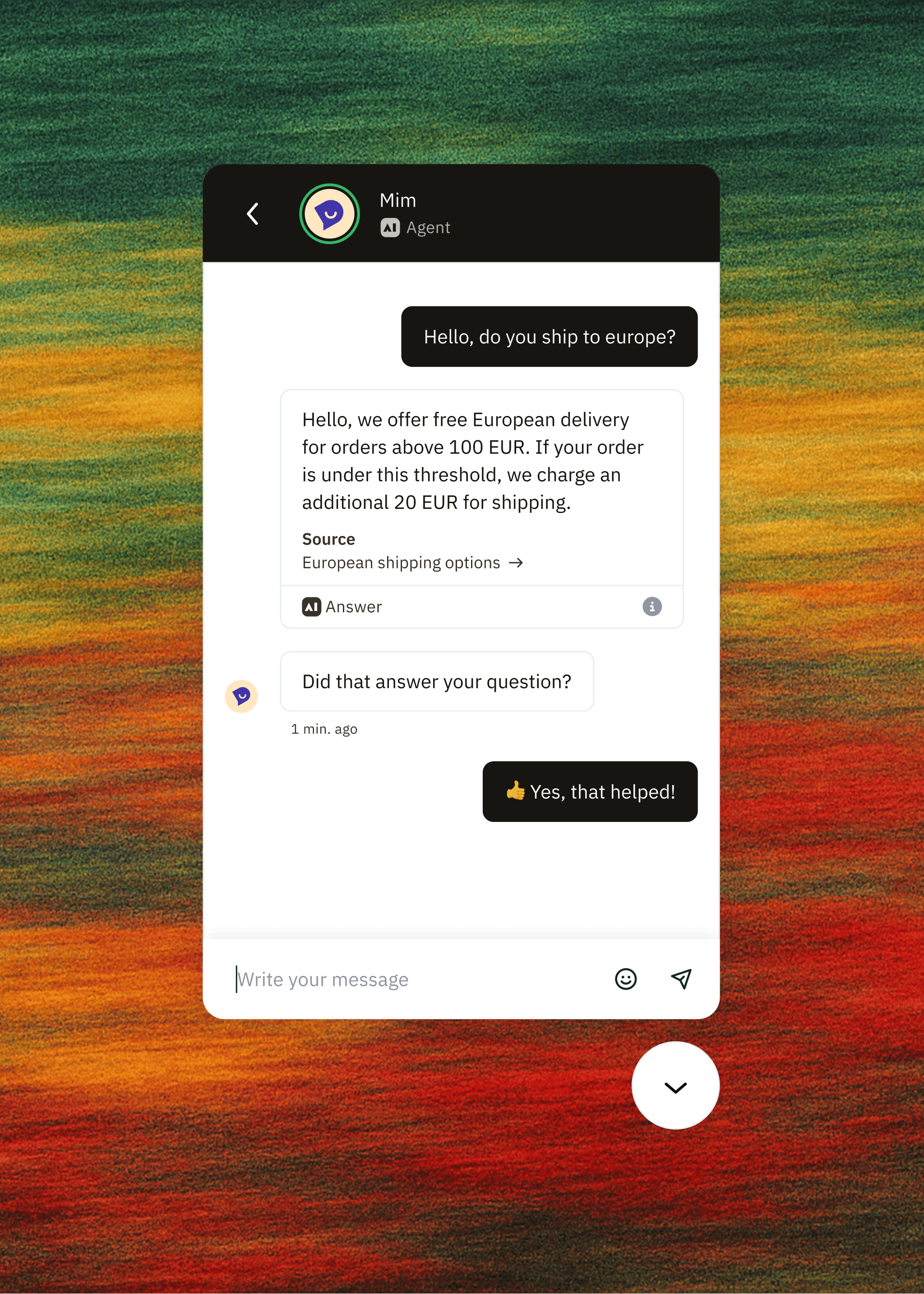
Repetitive WISMO and refund queries consume agent time that should go to conversations that need a human. Mim, Dixa's AI agent, resolves up to 80% of routine inquiries across chat, email, and WhatsApp at €0.40 per conversation whether it resolves or escalates. Phone stays a native channel on every plan, and Mim on Voice answers calls in 16 languages with per-conversation billing. AI Voice Transcription and Quality Assurance are available as add-ons. Team Hub, the unified agent workspace, shows live order data, conversation history, and customer context side by side on one screen. At tink, a German smart home retailer, email response time fell from 4–5 days to roughly 50 minutes, with Mim handling 59% of emails and 70% of live chats without human involvement.
Gorgias for small-volume Shopify teams
Gorgias built its reputation on deep Shopify integration and per-ticket pricing that suits small volumes. Its pricing page documents the deepest native order editing in the category, with agents creating, duplicating, editing, refunding, and cancelling orders and generating discount codes from the conversation. For brands under 500 tickets per month with a Shopify-native stack, that model works. Dixa includes native voice on every plan and prices per agent, so growth in conversation volume does not translate directly into growth in your bill.
Intercom for in-app messaging teams
Intercom built its strength in product-led SaaS and in-app messaging. For ecommerce brands where most volume is product questions and WISMO rather than in-app messaging, that strength matters less. Fin, Intercom's AI agent, is billed per outcome, while Dixa bills Mim at a flat €0.40 per conversation, with no allowance cap.
Zendesk for enterprise breadth
Zendesk offers a broader feature set including AI, automation, and live chat, with a marketplace of more than 1,900 integrations, the largest in the category. Brands already deep in the Zendesk ecosystem benefit from that breadth. Its AI is billed per automated resolution, with plans including between 5 and 10 resolutions per agent per month depending on tier (5 on Support Team and Suite Team, 10 on Suite Professional).
Resolutions cost $1.50 committed or $2.00 pay-as-you-go above the allowance, per Zendesk's published pricing. Dixa includes native voice and prices AI per conversation.
Kustomer for CRM-first customer history
Kustomer's CRM-first data model gives agents deep customer history, which suits brands with complex, multi-purchase relationships. That model has limited EU adoption and narrow integrations compared to platforms built for the European market. Dixa is SOC 2 Type II certified and stores data on Amazon's secure servers in Ireland.
Platform integration capabilities for Shopify
Linking order data to every conversation
Deep Shopify integration puts order actions in the conversation view, and Shopify actions for agents and Mim run on the same data.
Gorgias documents deeper native order editing, while Dixa pairs its Shopify coverage with native voice and support for Magento, WooCommerce, and custom builds, which matters for brands running more than one storefront.
Agent access to interaction logs
A customer who emails on Monday and calls on Wednesday should not have to repeat their problem. An agent switching between an order system, an email tool, and a phone platform burns shift time on navigation instead of resolution. Team Hub eliminates that context-switching by showing order history, conversation history, and live channel access on one screen.
Dixa’s unified interface makes it easy to manage phone, email, and chat from a single window, reducing the need to switch between tools. The skill‑based routing and queue management help ensure customers are connected to the right agent quickly. Its clean, intuitive design shortens onboarding time for new team members, and the customer support team is generally responsive and helpful. - Rodrigo M. on G2
Automating repetitive Shopify tasks
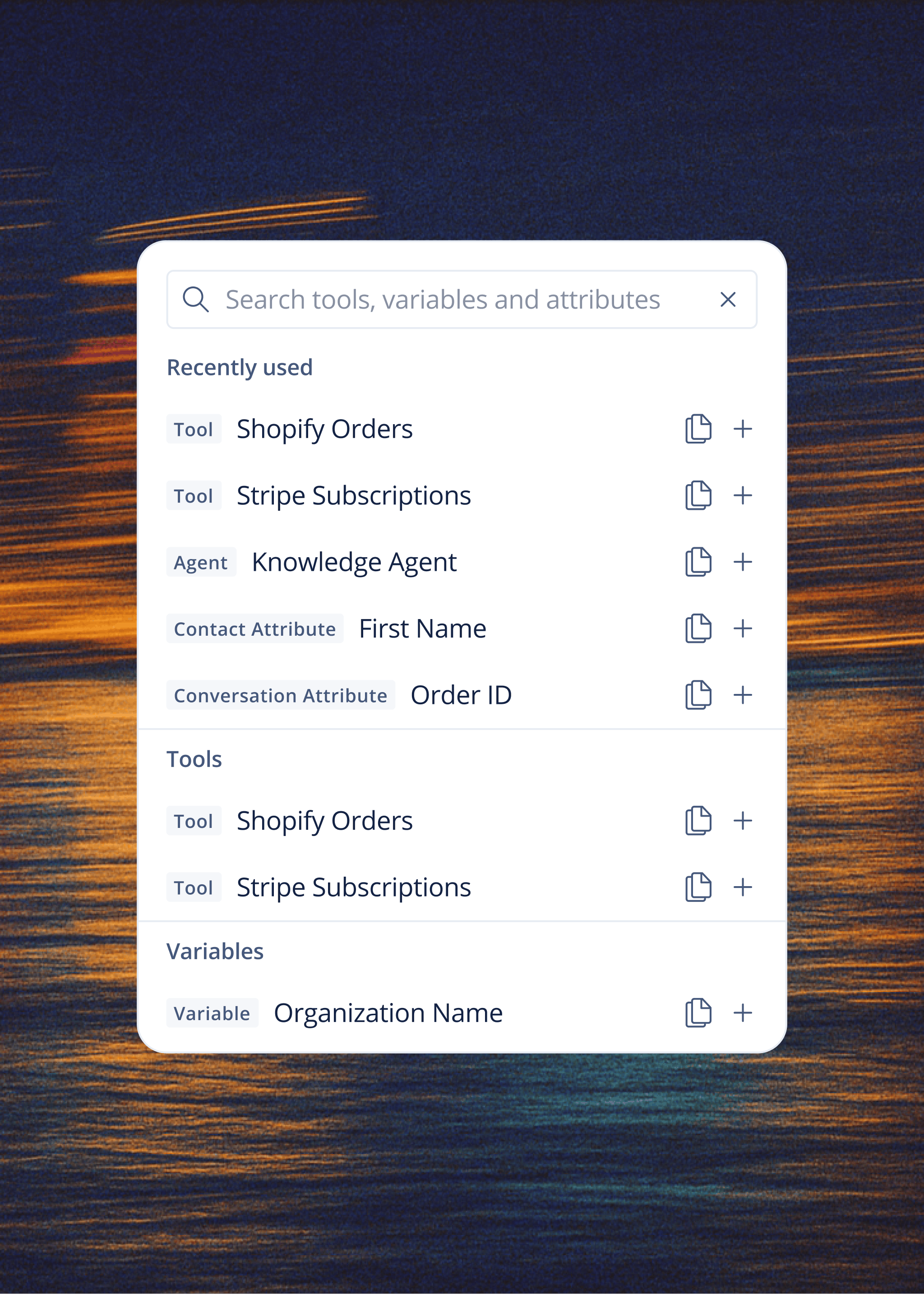
Refund processing, order updates, pre-purchase questions, and WISMO responses can all be automated when the AI agent has direct access to order data. Mim processes refunds, updates orders, and answers pre-purchase questions through Shopify, Magento, and custom integrations, so it completes actions as well as answering questions.
Managing Shopify order sync depth
API rate limits, sync frequency, and data depth vary by vendor. Dixa's Shopify integration draws order data straight into the workspace, and deeper sync depth means fewer manual lookups and faster resolution.
Automated triage and routing features compared
Reducing volume through self-service
A chatbot that deflects but does not resolve leaves the customer with the same problem and a queue that looks shorter than it is. Hobbii boosts self-service to 81% with Dixa, handling 22,000 monthly conversations across 20 markets.
Agent assist and response suggestions
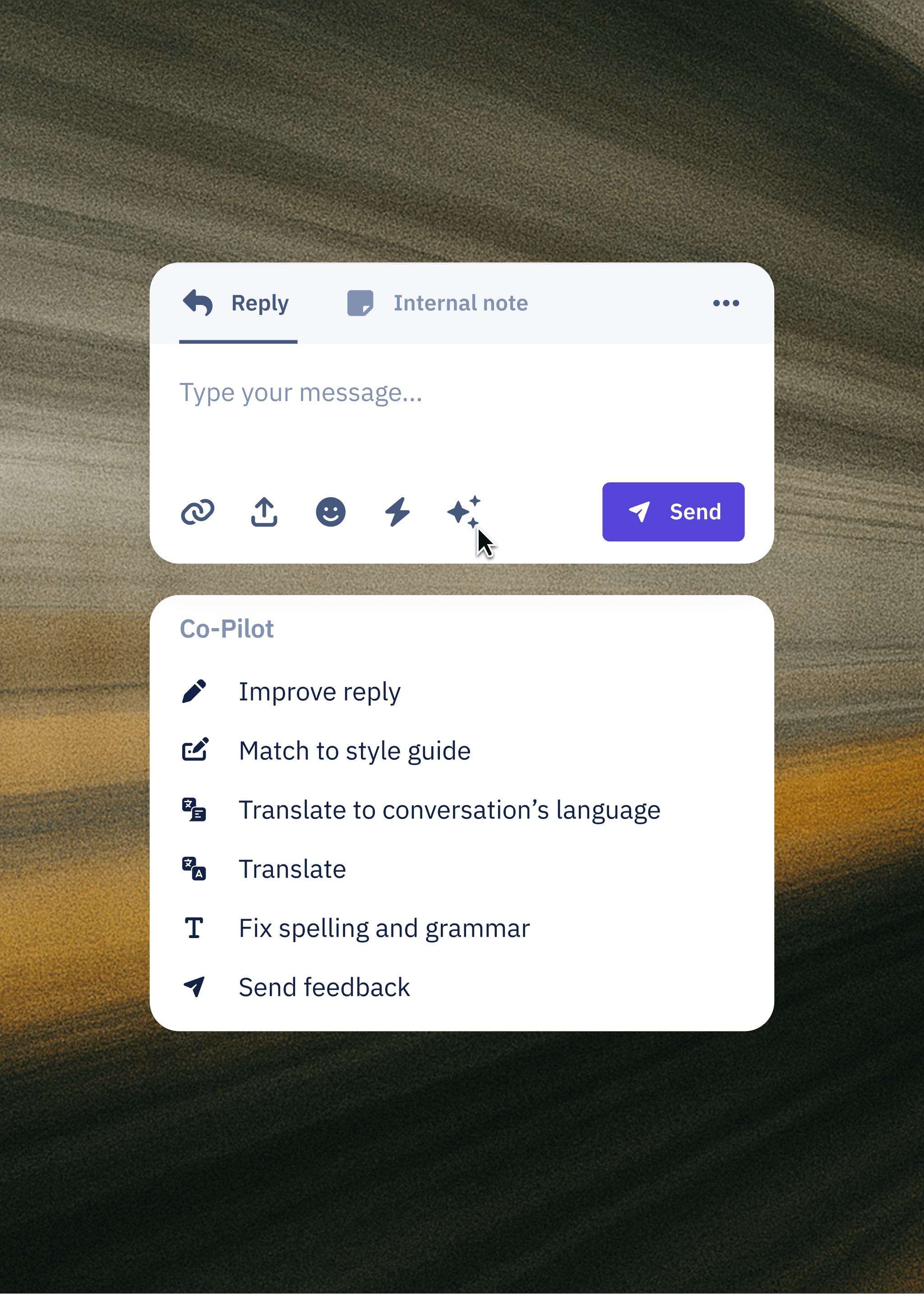
AI can assist human agents through suggested responses, context summaries, and next-best-action prompts. Dixa's Co-Pilot, the agent-assist add-on at €39 per agent per month, sits outside the base plan price and should be factored into total cost calculations.
Automated tagging of contact reasons
Contact-reason categorisation turns the queue into customer intelligence, so when the same product complaint surfaces 200 times in a month, that data should reach your merchandising team without a manual export. Advanced Insights adds AI-powered categorisation and sentiment detection, included on the Enterprise plan or available as a €29 per agent per month add-on on the Team and Professional plans.
Automating queue priority and distribution
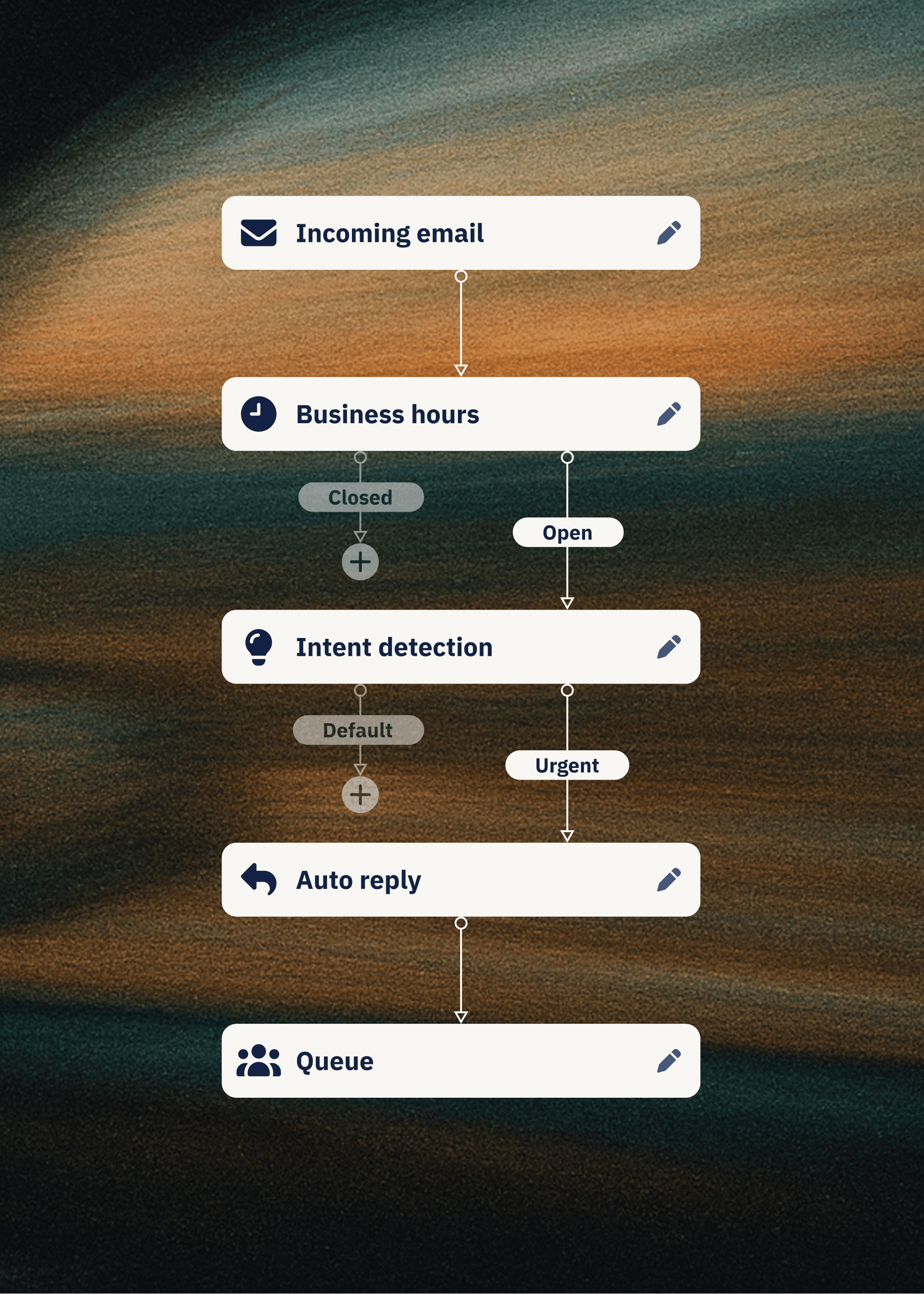
Intelligent routing distributes conversations by skill, language, VIP status, and workload. Intelligent routing ships on Team, while skills-based routing and standard AI Intent Detection require Professional, and Advanced Intent Detection requires Enterprise. Dixa's no-code Flow Builder lets the CS team change a routing rule the same day the problem surfaces, without filing an IT ticket.
Help desk costs and ROI for growing teams
Key plan features for growing teams
Dixa is priced in EUR and the others in USD, so compare totals after conversion.
Dixa sells three plans, Team, Professional, and Enterprise. Team sets the €49 per agent per month entry price, Professional costs €139 per agent per month, and Enterprise is custom-priced to your volume and setup. Annual billing is the standard option, and monthly, quarterly, and semi-annual billing are available at a surcharge.
Managing per-agent licensing costs
Per-ticket pricing punishes growth: the more conversations your brand generates, the more you pay, regardless of whether your team handles them efficiently. Per-agent pricing rewards efficiency because your cost scales with team size.
Impact of AI tools on headcount
tink cut Black Friday seasonal hires from 80–90 to 10 after rolling out Mim, with Mim absorbing the volume while the team handled the complexity that needed a human. Charles Tyrwhitt saved £370,000 per year, calculated as 12 FTEs, after unifying 130 agents on one platform. These are structural changes to how the operation absorbs volume.
Hidden pricing and renewal risks
Per-resolution AI pricing adds up in ways that are difficult to forecast at contract signing. Telephony metering, overage charges, and renewal price increases are the three areas where costs surprise CS leaders most often. Mim is billed per conversation whether it resolves or escalates, so the invoice does not depend on how a vendor counts resolutions. The rate has no allowance cap and never rises with volume.
Essential requirements for ecommerce help desks
Scaling support capacity for Black Friday
Peak season exposes the weaknesses a CS operation carries all year. The brands that hold CSAT through peak are the ones that resolved their structural volume problem before November, so the routine share of the spike never reaches an agent.
Oliver Bonas, a British lifestyle retailer, held CSAT at 90% through peak season while hiring up to 30 fewer seasonal agents, because Mim absorbed the tier 1 volume and the permanent team handled the rest. Your results will depend on your vertical, channel mix, and how much of your volume is routine.
Expected migration windows and data risks
Migration timelines depend on stack complexity, data volume, and IT availability. AllSaints was live on Dixa in three weeks, and Charles Tyrwhitt went live on Dixa, unifying email, voice, and chat onto a single platform for the contact centre. Time the go-live window carefully: go live at least six weeks before peak starts, which means early October for a mid-November peak. If that date has passed, go live in January rather than launching during peak. Before signing with any vendor, confirm these three items:
- Data porting plan: Which historical data moves, in what format, and who owns the export from your current platform.
- Parallel running period: How long both platforms run simultaneously, and what triggers the cutover decision.
- Named onboarding owner: A specific person at the vendor who is accountable for your go-live date.
Live queue monitoring capabilities
Delayed reporting forces manual ticket counting during surges, and a dashboard that is 24 hours behind means you are making staffing decisions on gut feel. Real-time analytics ship with Dixa's Team plan, and reporting is the most-cited pain among customers who switched to Dixa. Dixa's G2 rating is 4.2 from 391 reviews, with ease of use and support quality as the top positives.
Imagine every pain point you've experienced with Intercom, Zendesk, or similar platforms—now remove them. That’s Dixa. It’s agent-friendly, management-friendly, and provides easily digestible data, perfect for those with little time to spend formatting. Their support team is outstanding; they don’t just offer assistance but genuinely care about the success of your team. - Bailey A. on G2
Fixing friction in agent interfaces
Agents spending time gathering context before they can help is a cost that compounds across every shift. Gartner named Dixa one of four Digital-First Specialists in its August 2025 Competitive Landscape: Digital Customer Service report, the only one recognised for advanced native voice.
See how brands in your vertical are handling peak season volume. Book a 30-minute demo.
FAQs
What is the best help desk software for ecommerce brands?
Dixa is a strong fit for premium European ecommerce brands that need native voice on every plan, AI that resolves conversations, and EU compliance. Gorgias suits smaller Shopify-native teams where per-ticket economics favour low-volume support.
How much does ecommerce help desk software cost?
Dixa starts at €49 per agent per month on annual billing, plus €0.40 per Mim conversation. Zendesk Suite starts at $55 per agent per month, with phone ($83 per agent for the Contact Center add-on) and AI resolutions beyond the included allowance billed on top. Gorgias starts at $10 per month for 50 tickets.
What Shopify integrations should I look for?
Look for real-time order sync, refund processing, shipping event visibility, and customer history in the agent workspace, since deep integration means agents stop switching tabs to find order data.
Can help desk software reduce seasonal headcount needs?
Yes. Help desk software reduces seasonal headcount when an AI agent resolves routine queries like order status and refund updates before they reach the queue, and routing spreads the remaining volume across your permanent team. The extra agents you would have hired for tier 1 volume during peak are no longer needed.
How long does platform migration take?
Most Dixa migrations go live in two to four weeks with guided onboarding. Adding two weeks of parallel testing brings the total to four to six weeks. Go live at least six weeks before peak starts, or wait until January.
Key terms glossary
Resolution rate: The percentage of conversations closed with a confirmed outcome, such as a refund processed or an order status confirmed. Dixa reports a median Mim resolution rate of 62%.
WISMO: "Where is my order." The single most common ecommerce support query, and the one that should be automated first.
First contact resolution (FCR): The percentage of conversations resolved in the first interaction, without follow-up.
First response time (FRT): The time from customer contact to first agent or AI response.
Average handle time (AHT): The total time an agent spends on a conversation, including context-gathering and after-call work.
Queue depth: The number of conversations waiting for a response at any moment, which real-time dashboards show live.
Cost per contact: Total support cost divided by conversation volume, used to compare platform economics.
Per-conversation pricing: AI billed per conversation handled, whether resolved or escalated. Dixa's model.
Per-resolution pricing: AI billed only when a conversation is resolved. Zendesk and Intercom use this model.
Author

Stay in the know
Get CX insights, proven strategies, & the latest news in your inbox every month!