

TL;DR: Ecommerce customer service drives repeat purchase when AI resolves the routine tier 1 queries, your team can see the queue in real time, and contact-reason data proves service pays for itself. This guide covers the channels, the AI, the peak-season playbook, and the business case. The ecommerce brands named here resolved up to 82% of live chat conversations with AI, reached 81% self-service on order questions, and cut email response times from days to minutes while holding CSAT steady. The brands that hold CSAT through peak changed how conversations get handled, so the same team absorbed the surge without seasonal hires.
The reality of ecommerce customer support
Ecommerce customer service sits after checkout, and it decides whether the customer comes back. Every question about sizing, delivery, or a return is a chance to keep a buyer, and the brands that hold CSAT through Q4 treat it that way.
How ecommerce support differs from traditional retail
Ecommerce support is asynchronous, multi-channel, and high-volume. A customer who emails on Monday and calls on Wednesday expects the agent to know what the email said. When context doesn't carry across channels, handle time inflates and satisfaction erodes.
Volume spikes during peak season are extreme and predictable, and Black Friday exposes the weaknesses already in a CS operation.
Customers contact teams through email, live chat, phone, WhatsApp, Instagram, and Facebook Messenger, sometimes switching mid-issue. On separate tools, agents spend the first minutes of every conversation reconstructing what happened on the others.
Why service quality drives repeat purchase
Service quality affects repeat purchase rate: a conversation handled well gives a customer a reason to return, while one handled badly gives them a reason to leave a one-star Trustpilot review and shop elsewhere.
The financial case is measurable. Charles Tyrwhitt, a premium menswear brand running 130 agents, saved £370,000 per year after switching to a platform that automated routine queries and unified their channels. CSAT rose from 91% to 92.4%, NPS improved from 60 to 67, and the transformation programme returned 250% ROI.
CS leaders who treat service as a growth driver show leadership the contact-reason data, the retention correlations, and the cost-per-contact trend, then ask what happens to repeat purchase rate when those metrics improve. That reframe changes the conversation from "can we afford this platform" to "can we afford not to fix this."
Strategies for multi-channel support
Your customers contact you on whichever channel suits them, and they expect the conversation to carry over when they switch. Each strategy below cuts the manual effort per conversation, so the same team handles more volume.
Scaling email without adding headcount
Email remains the highest-volume channel for most ecommerce brands, so the fix is automated responses for common queries plus AI handling the routine share.
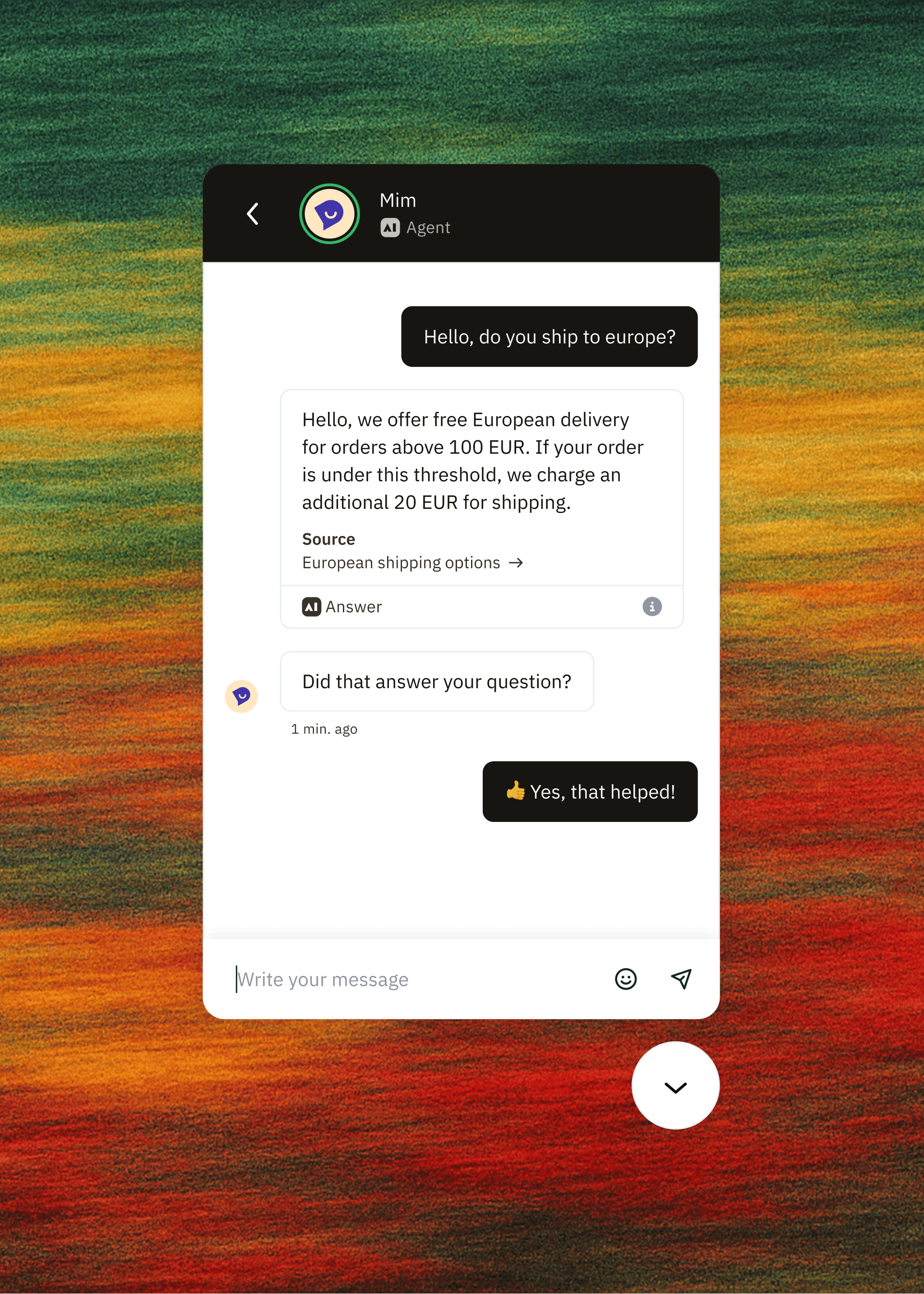
tink, a German smart home retailer, reduced email response time from 4–5 days to roughly 50 minutes using Mim to handle 59% of emails without human involvement, with the other 41% going to human agents.
Centralising email into the same workspace as every other channel eliminates the tab-switching that eats agent time.
Dixa’s unified interface makes it easy to manage phone, email, and chat from a single window, reducing the need to switch between tools. The skill‑based routing and queue management help ensure customers are connected to the right agent quickly. Its clean, intuitive design shortens onboarding time for new team members, and the customer support team is generally responsive and helpful. - Rodrigo M. on G2
Live chat best practices for ecommerce
Live chat answers pre-purchase questions that stand between a shopper and a conversion, and resolves post-purchase queries quickly. The brands that get the most from it trigger a chat window when a shopper lingers on a product page or hesitates at checkout.
AI resolves the routine share here too: at Smartphonehoesjes, a Dutch phone accessories retailer, Mim lifted live chat resolution from 25% under a scripted chatbot to 82% in under a year. Customers rated the AI at 65% against the human team's 68%, and many didn't realise they were talking to AI.
Dixa routes conversations by skill, language, priority, and VIP status using rules built in its no-code Flow Builder, and the CS team builds and changes those rules without filing an IT ticket.
Reducing WISMO call volume
WISMO ("where is my order") is the highest-volume query type and the most automatable, because the answer lives in the order management system.
At Hobbii, the Danish yarn retailer, order questions pushed contacts per order above 30% as the business grew. Mim achieves an 81% self-service rate there, pulling order status from the systems that hold it.
When order status updates are automated and accessible through self-service, the volume that reaches agents drops, and what remains are conversations that need judgement: damaged items, delivery disputes, complex returns.
Social channels as service channels
Instagram and Facebook Messenger are service channels whether CS teams plan for them or not. Dixa covers every channel including social in one workspace with full conversation history, so an agent sees the Instagram DM and the email thread side by side.
Using the knowledge base to cut repeat queries
A well-maintained knowledge base handles queries before they reach an agent, and Mim draws from it to resolve tier 1 queries without agent involvement.
The knowledge base works when it's current, searchable, and written in the customer's language, and Dixa includes it in all plans, where it feeds into Mim's resolution capability.
Ecommerce customer service best practices
Speed up your initial customer replies
First response time (FRT) is the metric customers feel most directly, and it's where the brands in this guide moved fastest.
The mechanism behind those results is a combination of AI resolving tier 1 queries before they reach the queue and intelligent routing getting the rest to the right agent faster.
Increase one-touch resolutions
First contact resolution (FCR) measures whether a customer's issue is resolved in a single interaction. The ecommerce average sits at 70–75%, with top performers reaching 80–85%.
One of the biggest barriers to FCR is context fragmentation: when an agent has to check three systems to answer one question, the conversation often requires a follow-up. Dixa's agent workspace, Team Hub, shows order data, past conversations, loyalty status, and AI-suggested replies on one screen.
Surface order history in one view
Agents switching between an OMS, an email tool, and a phone system waste time that should go to the customer. Dixa integrates natively with Shopify, Magento, and WooCommerce, pulling order history and loyalty data into the conversation view. The agent sees what the customer bought, when, and what happened with every previous conversation, without leaving the screen.
Automate routing by skill
Intelligent routing distributes conversations based on agent skill, language, priority, workload, and VIP status. Contorion, an online shop for professional gear, cut a backlog of more than 1,400 tickets after intelligent routing ended cherry-picking, cutting the backlog by 80% while agent productivity rose 21%.
Dixa offers a function for assigning open customer concerns across platforms (e-mail, telephone, chatbot, social media, etc.) according to finely configured priorities. This means that work is no longer carried out bluntly according to lists. In addition, Dixa offers the function of easily incorporating your own system integrations in the form of HTML-based custom cards, which also makes work much easier. In general, Dixa has a very good interface and makes the daily work of our entire Customer Success team much easier! - Verified user on G2
This matters most during peak, when the difference between a well-routed queue and a poorly routed one is the difference between hitting SLAs and missing them. Gartner named Dixa one of four Digital-First Specialists in its August 2025 Competitive Landscape: Digital Customer Service report.
Track contact reasons to fix root causes
The same product complaints and friction points surface hundreds of times a month in the CS queue, yet in most operations none of it reaches marketing, product, or commercial leadership in usable form.
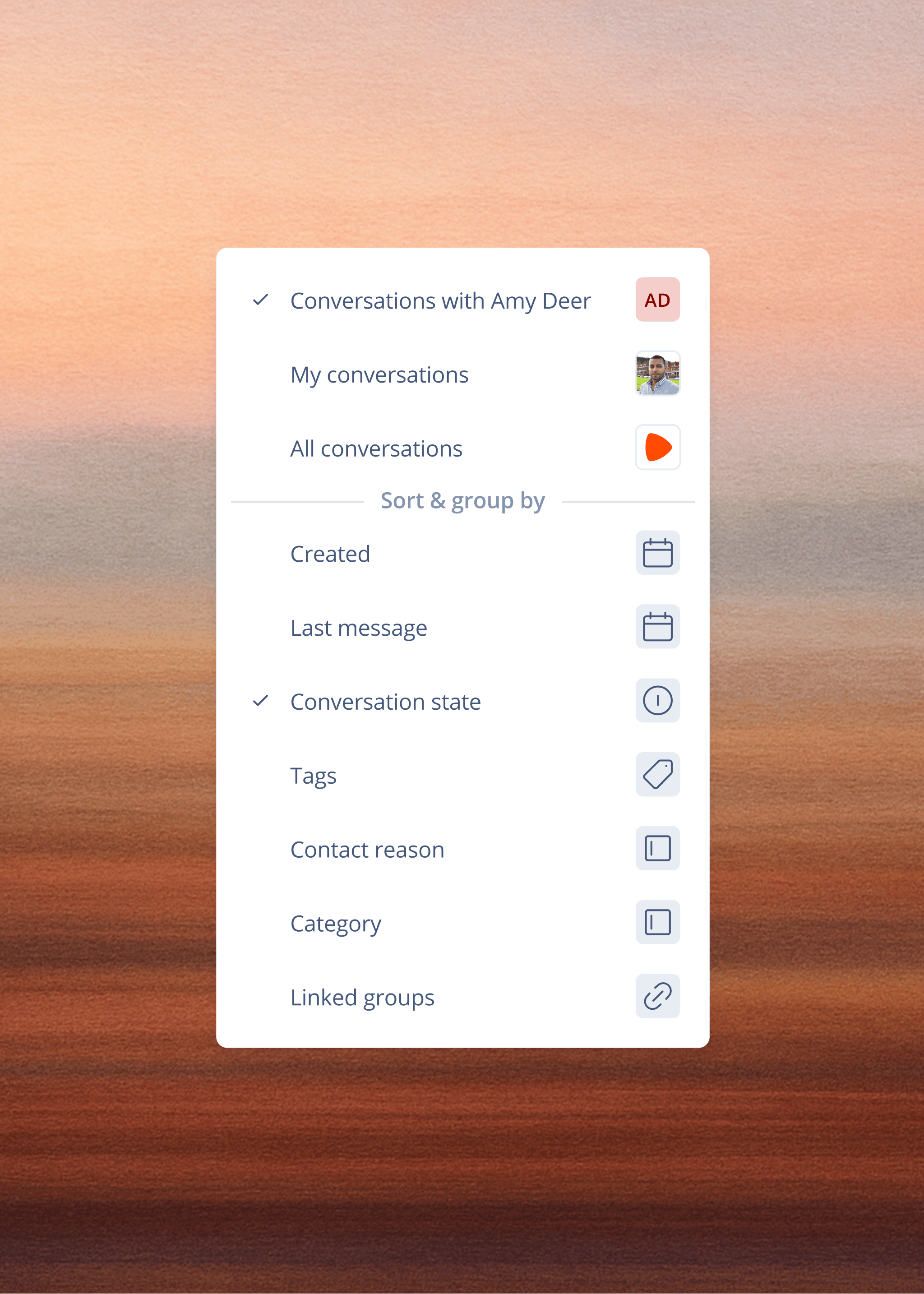
Contact-reason categorisation turns queue data into intelligence. Dixa's Advanced Insights feature uses AI to categorise every conversation by contact reason and detect sentiment, and it's included on Enterprise or can be added to any plan as a €29/agent/month add-on. The output is a report you can put in front of the CFO without someone building it manually in a spreadsheet first.
Automating tier 1 queries to protect agent time
Automation in ecommerce customer service works when it resolves conversations. A chatbot that tells every caller to read the FAQ reduces measured volume while leaving the problem unsolved, and unresolved queries come back, often through a more expensive channel.
Automate routine customer inquiries
Dixa's AI agent, Mim, resolves conversations from first message to confirmation on chat, email, WhatsApp, Instagram, Messenger, SMS and voice calls (in beta). It processes refunds, updates orders, and answers pre-purchase questions through Shopify, Magento, and custom integrations.
Mim costs €0.40 per conversation with no per-seat component and no allowance cap
Automate WISMO status updates
Order status automation removes the single highest-volume query type from the agent queue. If WISMO makes up a large share of your queue, as it does for most fashion and lifestyle brands, automating it frees your team for the conversations that need a person.
Automate contact reason classification
Manual tagging of contact reasons is unreliable because agents tag inconsistently and the resulting data is too noisy to present to leadership. Dixa applies the same taxonomy to every conversation automatically using Advanced Insights, and the categorisation feeds into its Discover analytics dashboard. CS leaders can see contact-reason trends for quarterly business reviews.
Defining thresholds for manual support
Automation works when the boundary between "AI resolves" and "human resolves" is defined, and Mim escalates when it can't resolve a query or when a human agent is the better answer.
Escalation rules get defined before go-live and adjusted in quarterly reviews based on resolution rate data. Every Dixa customer works with a named customer success manager who co-builds those thresholds, so calibration continues as automation coverage and service quality shift.
Managing seasonal surges with lean teams
Brands that hold CSAT through Q4 absorb routine volume with AI, so the same team handles the surge.
Optimise ecommerce support for Black Friday
tink cut Black Friday seasonal hires from 80–90 to 10 after rolling out Mim, as Mim absorbed the routine volume and the team handled the complexity that needed a human.
Manage surges by automating the routine share
If your normal daily volume is 500 conversations and Black Friday brings 4,000, automating the routine share of those conversations is the practical way to cover the gap for one week. Oliver Bonas, a British lifestyle retailer, reduced peak-season hiring by up to 30 agents while maintaining 90% CSAT, because Mim absorbed the tier 1 volume while the permanent team handled the rest.
Monitor real-time queue data during peaks
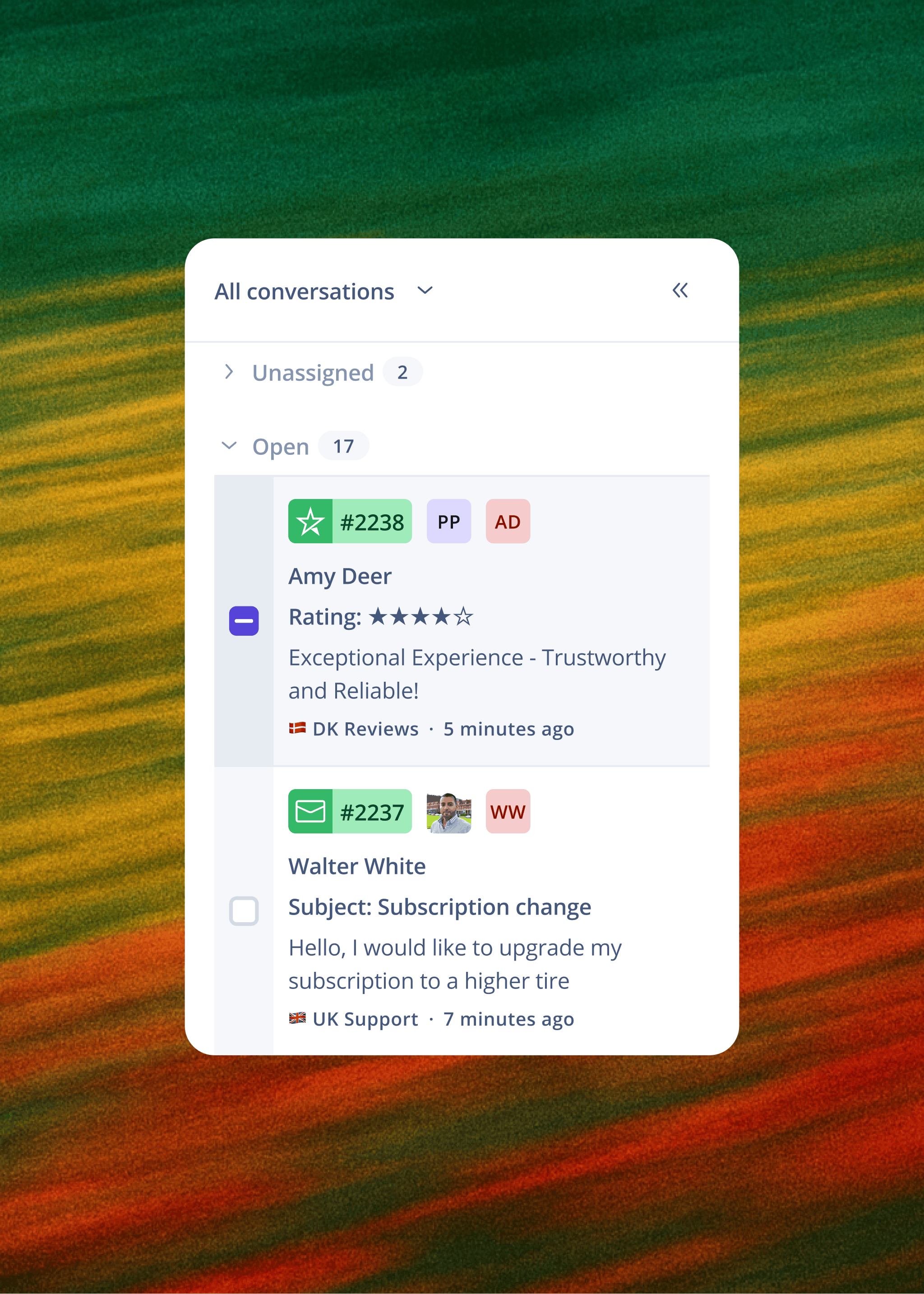
During a surge, delayed reporting is useless, so CS leaders need to see queue depth, FRT, and CSAT as they happen rather than waiting for a report that arrives the next morning.
Dixa includes real-time analytics in its entry plan (Team). The dashboard shows live queue depth, agent availability, and response times across every channel, so you can make live staffing calls during Black Friday instead of counting queues manually and guessing. Royal Design, the Scandinavian design retailer, saw calls answered rise by 87% and agents save two hours per day once every channel ran through one queue with live prioritisation.
Avoid CSAT dips during holiday spikes
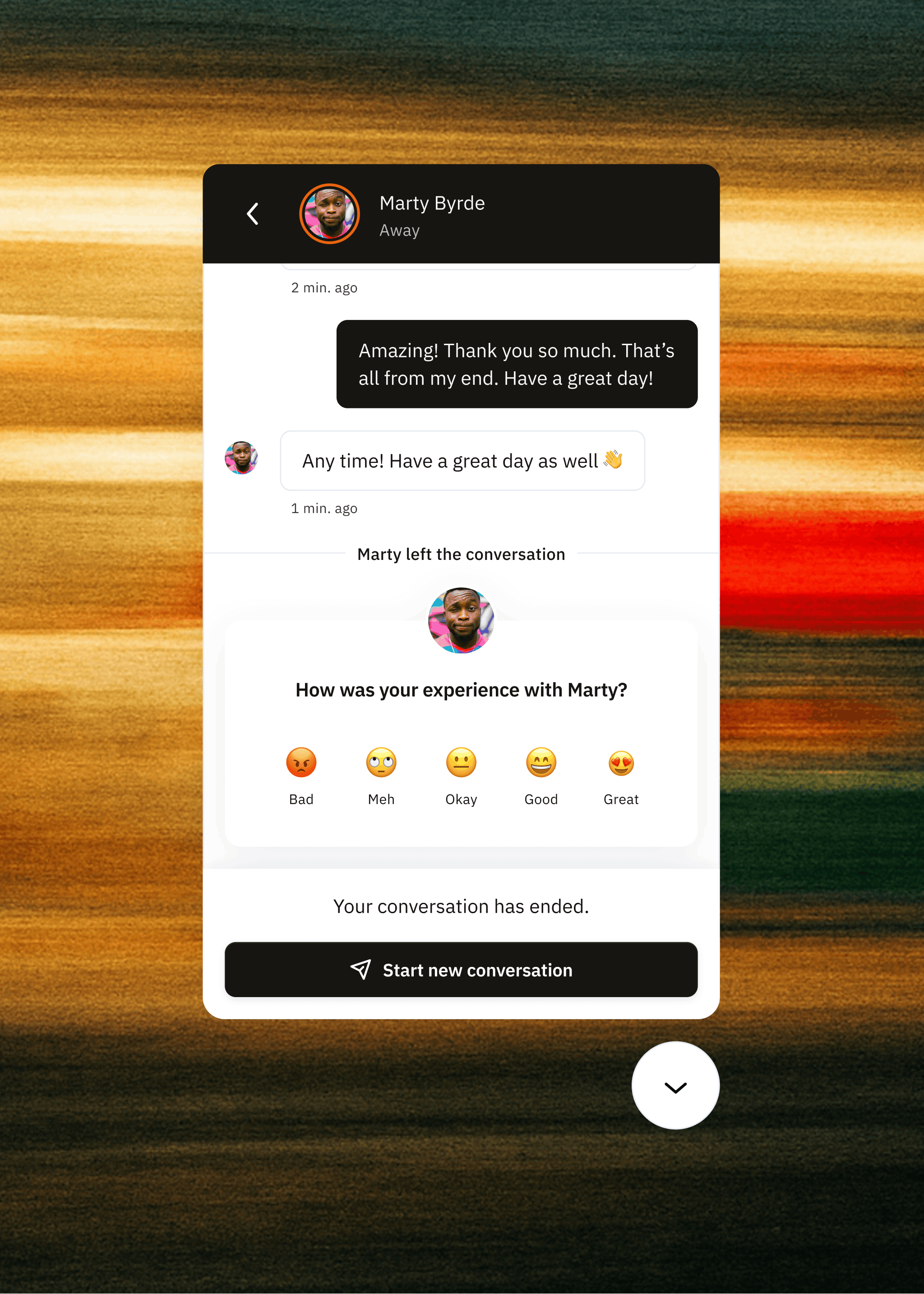
CSAT erosion during peak is a career event for a CS leader. The brands that hold satisfaction scores through Q4 automate routine volume so agents have time for complex conversations, and monitor CSAT by channel so they can step in before a dip becomes a trend.
At Stayforlong, filtering supplier auto-replies out of the queue and automating routine booking tasks improved CSAT, as the team stopped drowning in repeat noise and could give attention to the conversations that carried risk.
Proving ROI to finance for CS tooling
The CFO asks what customer service contributes to the business, and the answer needs to be a number the CFO can verify.
Calculate cost per contact
Cost per contact is the foundational metric for any CS business case, calculated as total annual service spend divided by total customer interactions. If your annual service budget is £400,000 and you handle 80,000 conversations, your cost per contact is £5.00.
Show finance that cost per contact trends downward as automation absorbs routine queries, without headcount increasing. At Dott, response times fell by 70% and average handle time dropped by 40%, so the same payroll covered more conversations.
Manage peak surges with existing staff
The headcount-to-volume ratio is the structural argument. When volume grows 20% year on year and headcount stays flat, the gap is filled either by automation or by declining service quality, with no third option.
Handling a multi-fold volume spike on the same team is the structural solution, and the seasonal hires you no longer make are the auditable saving the CFO can point to.
Link CSAT to retention and revenue
CSAT and NPS are leading indicators of customer sentiment. Rapha, the cycling apparel brand running 90 agents, saw CSAT improve by 14% and customer retention climb by 17% after moving to Dixa, and improvements like that are the data points that connect service quality to loyalty.
The next step is connecting those metrics to customer lifetime value (CLV), the total revenue a customer generates over their relationship with the brand. When CSAT rises and repeat purchase rate follows, CS pays for itself through customers who buy again.
Translate support volume into ROI
The ROI formula for CS tooling is (financial gains minus cost of service) divided by cost of service, multiplied by 100. Oliver Bonas nearly doubled the contacts its team handled per hour, and that capacity gain is what the formula converts into a return.
Contact-reason data makes this argument concrete. When a CS leader can show that WISMO queries represent a large share of contacts, and that automating those queries at €0.40 per conversation costs a fraction of the agent time they currently consume, the business case becomes arithmetic a CFO can check against payroll and invoice data. Dixa holds a 4.2/5 rating on G2 from 391 verified reviews, with ease of use and customer support quality the most cited themes.
See how brands in your vertical are handling peak season volume. Book a 30-minute demo.
FAQs
What is a good first response time for ecommerce customer service?
A good first response time depends on the channel. Live chat and messaging customers expect a reply within seconds, and email customers expect one the same business day. Speed only counts if the first reply moves the issue forward, so track first contact resolution alongside FRT. The ecommerce average for FCR is 70–75%, and top performers reach 80–85%.
How do you measure ecommerce customer service performance?
Measure ecommerce customer service performance by tracking these five metrics:
- First response time (FRT): How long a customer waits for the first reply after reaching out, tracked per channel.
- First contact resolution (FCR): The share of issues solved in one interaction with no follow-up needed.
- Average handle time (AHT): How much of the team's time each conversation takes, from greeting to wrap-up.
- CSAT (customer satisfaction score): The rating customers give a conversation after it ends, usually shown as a percentage of positive responses.
- Cost per contact: What it costs the business to handle one conversation, calculated by dividing total service spend by conversation volume.
What are the most common ecommerce customer service queries?
WISMO ("where is my order") is the highest-volume query, followed by returns and refund requests, product questions, and delivery complaints. These tier 1 queries are the most automatable because the answers live in order management and product data systems.
How can I reduce customer service costs without hurting CSAT?
Reduce customer service costs without hurting CSAT by automating tier 1 queries (WISMO, refunds, order status) with an AI agent, then investing the freed capacity in faster, higher-quality responses on complex conversations.
Mim resolves conversations from the first message without agent involvement. Intelligent routing protects capacity too: Contorion cut its backlog by 80% once intelligent routing ended cherry-picking and sent each conversation to the right agent.
When should ecommerce brands switch customer service platforms?
Switch when your current platform can no longer handle your volume without hurting CSAT, and time the move so you’re live at least six weeks before peak, or wait until January.
The clearest signs it’s time are a peak season where the platform slowed or CSAT dropped, a contract renewal where AI add-on costs came in higher than expected, or routing changes that need an IT ticket and a two-week wait. Starting the evaluation three to four months before your renewal date gives you time to migrate without paying for two platforms.
Key terms glossary
FRT (first response time): The elapsed time between a customer contacting you and receiving their first reply, measured per channel.
FCR (first contact resolution): The percentage of conversations resolved in a single interaction without follow-up.
AHT (average handle time): The average duration of a customer conversation from start to resolution, including hold time and after-contact work.
CSAT (customer satisfaction score): A post-conversation survey metric, typically measured on a 1–5 scale and expressed as a percentage of satisfied responses.
WISMO: "Where is my order," the highest-volume query type in ecommerce and the most automatable.
Containment rate: The percentage of conversations the AI keeps away from human agents, whether or not the customer's problem was solved. It differs from resolution rate, which measures whether the problem was fixed.
Resolution rate: The percentage of conversations fully resolved, whether by AI or a human agent, and the metric that tells you whether customer problems got fixed.
Backlog: Accumulated unresolved conversations in the queue. A growing backlog during peak indicates structural capacity problems.
Repeat purchase rate: Percentage of customers who buy again within a defined period, the retention metric most influenced by service quality.
Author

Stay in the know
Get CX insights, proven strategies, & the latest news in your inbox every month!